Interpolation
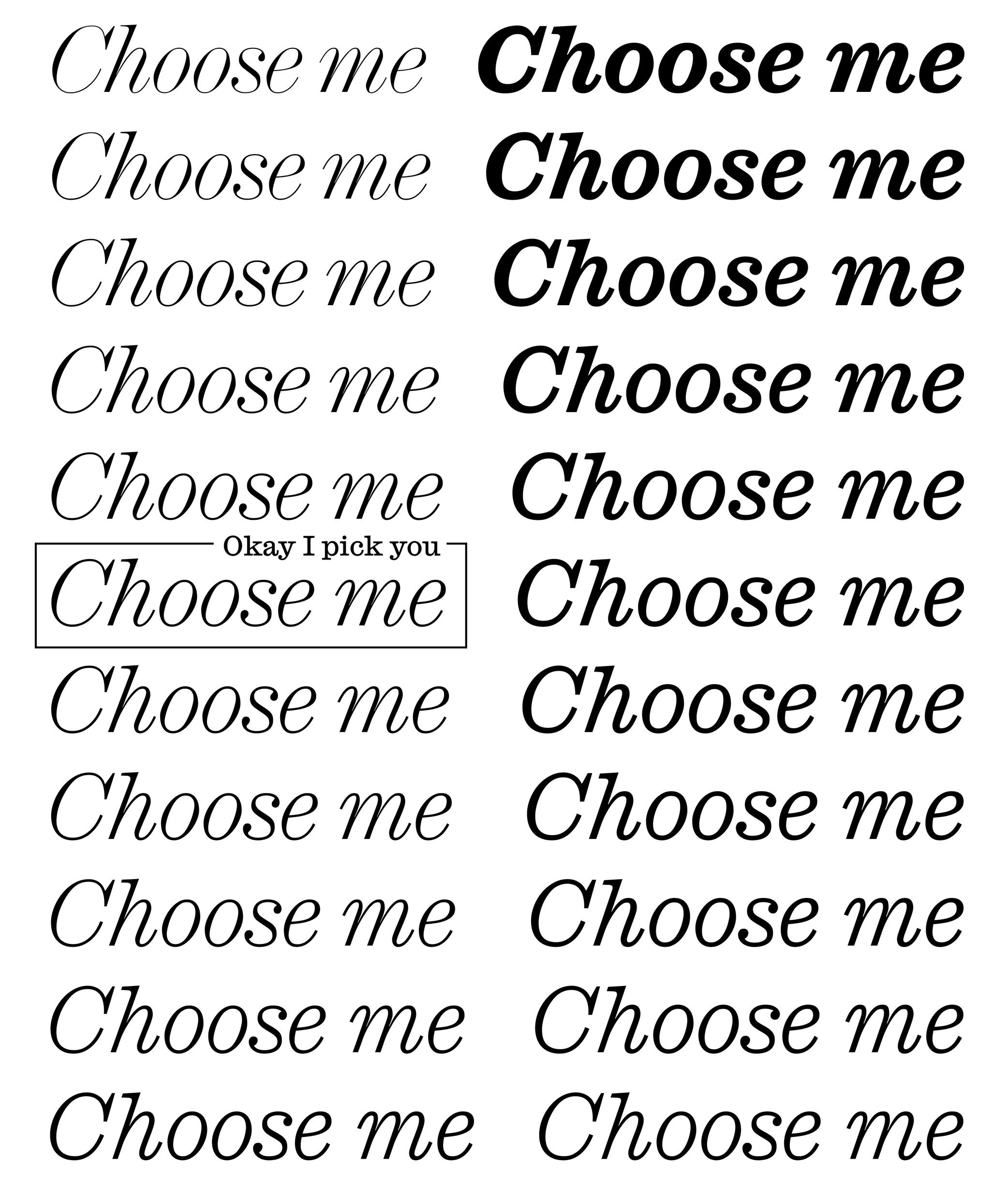
Sponsored by Commercial Type . Typeface in use: Ionic Modern , designed by Paul Barnes with Greg Gazdowicz, 2024.
Variable fonts technology allows users to navigate between two or more specific styles (called “masters” or ”sources”) with high precision and much smaller font file sizes than several static fonts.
An interpolation is the transformation of vector outlines from one master to another along one or more design axes. For example, the interpolation between a Regular and Bold style allows the generation of a Medium style (thus generating an “instance”) as well as any other intermediate state.
This process relies on the compatibility of the outlines across masters, meaning they must share the same structure and number of points to interpolate correctly.
Interpolation allows variable fonts to have a reduced file size because they store only two masters (or more) and variations data of every intermediates, rather than separate outlines for multiple styles there may be in between.
FONT ENGINEERING ADVICE
A variable font technically contains only one full master: the origin. This is the default style shown when variable font technology is not supported.
The other masters are stored as delta data—mathematical differences from the origin—used to interpolate and generate other instances dynamically. This delta data is stored in the gvar table.