Unit
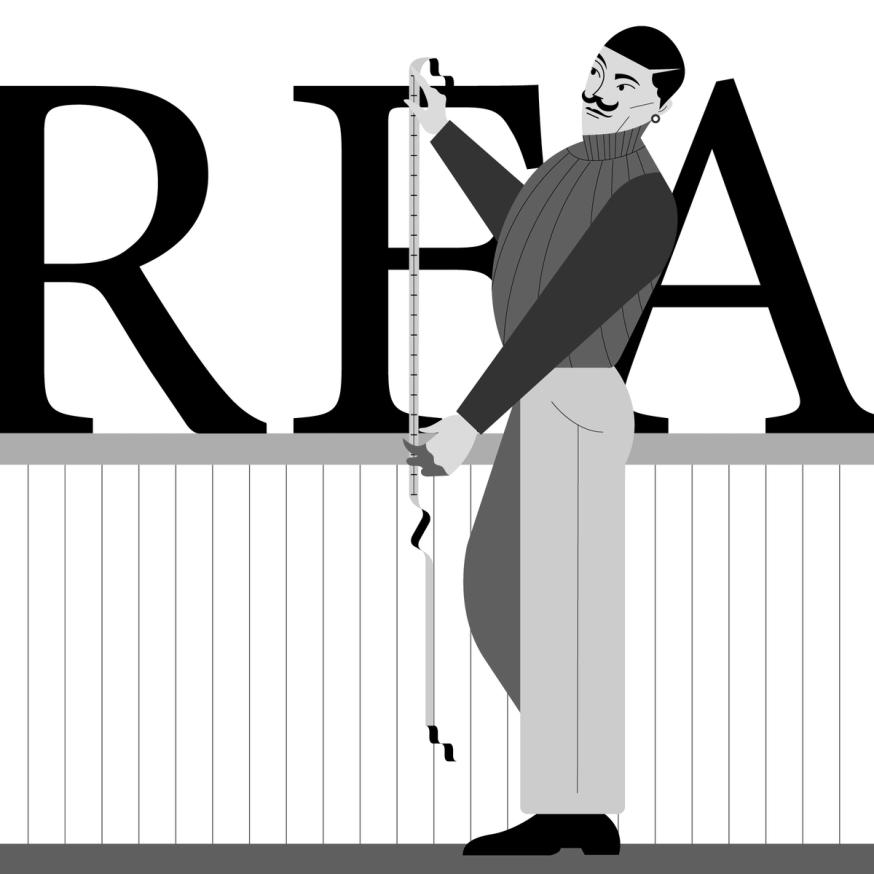
Illustration: Jonny Wan .
Font sizes are measured using a specific type of unit called points (pt).
Over the years and across regions, various units have been used (mainly for the Latin script), such as Didot, Cicéro, Pica, or even inches.
HISTORY
The term “em” originally comes from metal type: it was the width of the point-size square of a given type. The em square contains the body of the glyph (from the bottom of the descender to the top of the ascender) plus the space around it.
DIGITAL TYPE DESIGN
In digital type design, fonts are drawn in an imaginary box with a grid, called the em square. It defines the space in which all glyphs of a typeface are designed.
This square is subdivided into abstract units (literally called “units”). These units are scalable, so their actual size in pixels or points depends on the resolution of the screen and the chosen font size.
The height of the square is defined by UPM (Units per Em). For example, if UPM = 1000, the em square is 1000 units high. Outlines, spacing, and metrics are all defined relative to this square. For example, in a 1000-unit em square, the ascender height might be 700 units.
WEB DESIGN
The em also became a unit for digital layout. In web design, 1 em equals the font size of the active element. If the font size is 16 px, then 1 em = 16 px. A child element with font-size: 2em would render at 32 px.
In traditional print typography, the em square is converted into the chosen point size, linking the abstract design units to physical measurements.
FONT ENGINEERING HINT
The em square is the internal coordinate system used by font files. When a font is rendered, the rasterizer scales the em square to the requested font size, converting the abstract units into pixels. For example, if the em square is 1000 UPM and the font is displayed at 16 px, each unit corresponds to 0.016 px. This makes hinting important, as it ensures shapes remain legible once mapped to the pixel grid.